
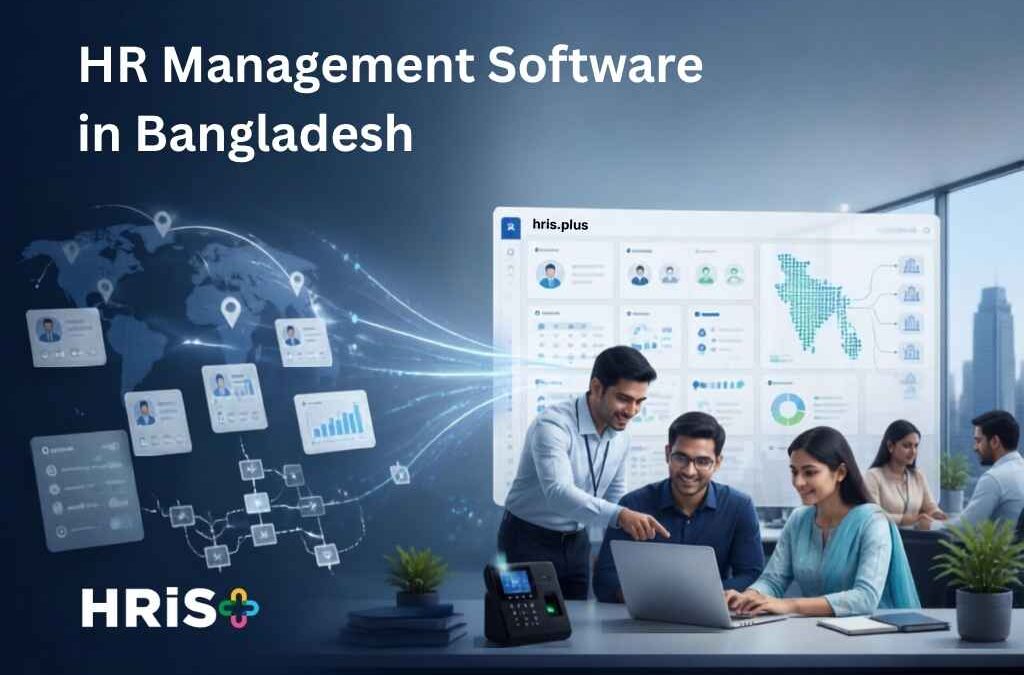
It’s 9 PM on the last working day of the month. Your HR manager is still at her desk, cross-checking a spreadsheet of AIT deductions against a tax bracket that changed three months ago. Down the hall, someone is chasing four different department heads for a signature on an exit clearance form. In the pantry, the meal register from the canteen doesn’t match what finance has budgeted — again.
None of this is a people problem. It’s a systems problem. And it’s exactly why so many HR management software searches in Bangladesh end the same way: a company signs up for a global HR platform, sets it up with excitement, and then quietly stops using half of it within six months.
Why “Global” HR Software Keeps Falling Short Here
Most HR software in Bangladesh being sold today wasn’t built here. It was built for HR teams in the US, the UK, or Singapore, and then localized with a currency symbol and a translated login page. That’s not the same as being built for how Bangladeshi companies actually operate.
Here’s what usually breaks first:
- Org structures don’t fit the boxes. Bangladeshi enterprises often run on layered hierarchies — Divisions, Departments, Business Units, Sections, and informal reporting lines that don’t map cleanly to a generic “manager → employee” model.
- Tax logic is an afterthought. Advance Income Tax (AIT), shifting fiscal year brackets, and challan management are treated as an “export to Excel and handle manually” problem instead of a core payroll feature.
- Office logistics get ignored entirely. Meal subsidies, canteen reconciliation, travel and conveyance claims, and paper-based clearance chains are day-to-day realities that most HR platforms simply weren’t designed to touch.
The result is a familiar pattern: the software handles the easy 70% and the HR team is still doing the hard 30% by hand — which, in most companies, is where the actual hours go.
What “Built for Bangladesh” Actually Means
This is the gap HRIS Plus was built to close. It’s a cloud-based HR, Payroll, and Operational Logistics platform developed by SmartWebSource, and it has been running in live production across 6+ major enterprise companies in Bangladesh for over 4 years — not as a pilot, but as the system of record handling thousands of employees daily.
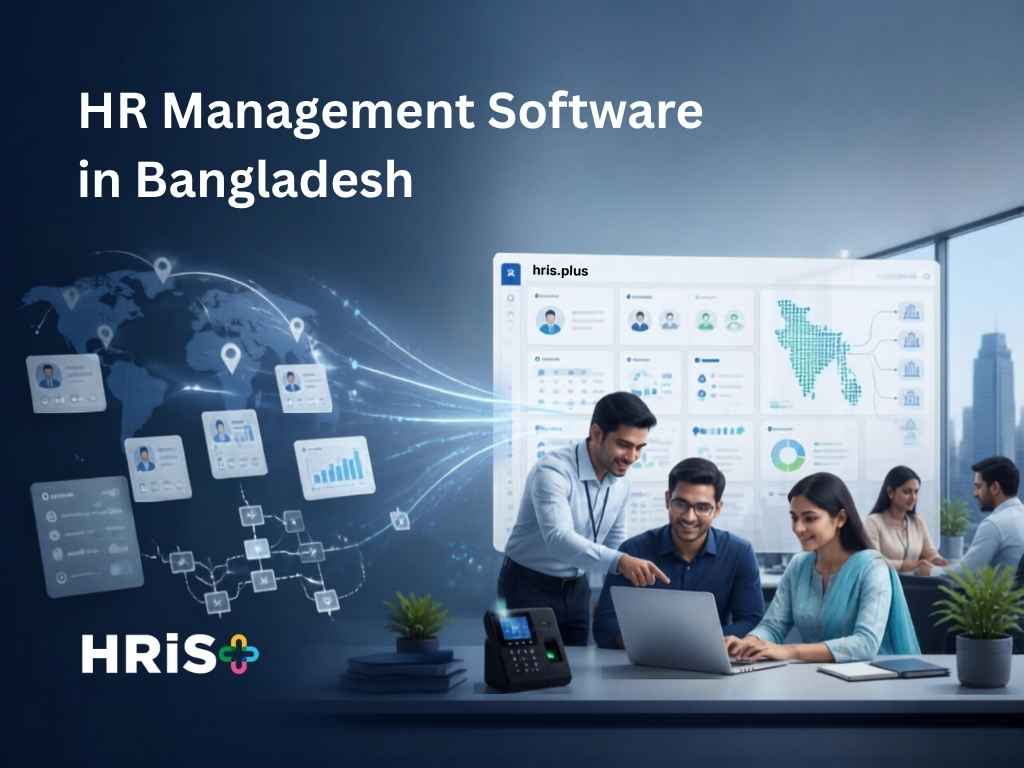
A few things that look different when software is designed around local reality instead of retrofitted for it:
Org structures that mirror how you actually work. HRIS Plus maps Divisions, Departments, Designations, Business Units, Teams, Sections, Locations, Areas, and custom Tags — so the org chart in the software matches the org chart in your head, not the other way around.
Payroll that understands Bangladeshi tax law. Advance Income Tax management, tax return generation, and challan tracking are handled natively across shifting fiscal years, with salaries mapped to specific cost centers and disbursement slots. No more rebuilding a tax model in a spreadsheet every time a bracket changes.
Attendance that reflects a hybrid, on-ground workforce. Native BioTime biometric integration syncs hardware to the cloud instantly, and day-wise tracking covers late marks, leave, work-from-home, out-office engagements, and travel — not just clock-ins.
Logistics modules most platforms don’t even attempt. This is where the difference is most visible:
- A full Meal Management System — subscriptions, daily allocation and consumption logs, requisitions, company-vs-employee cost sharing, and automated reconciliation reports.
- Clearance Automation that replaces the paper trail with dynamic, authority-wise routing and feedback logs.
- Travel & Conveyance Management with claim tracking and approval routing.
- Auto-generated ID cards, visiting cards, and NOCs, so admin staff stop reformatting the same letter templates every week.
Who This Actually Solves For
If you’re comparing HR software in Bangladesh right now, chances are you fall into one of these seats:
- HR Directors tired of manually tracking attendance across branches, chasing signatures for exit clearance, and retyping NOC letters from scratch each time.
- CFOs and Finance Managers who lose hours every quarter recalculating AIT by hand and reconciling canteen subsidies that never quite match the books.
- CEOs and Business Owners who just want one clean source of truth — no ghost costs in payroll, no system that quietly breaks the moment it’s put under real load.
HRIS Plus was shaped around exactly these frustrations, because it was built by watching them happen inside real Bangladeshi companies, not guessed at from a template.
Why “Battle-Tested” Matters More Than “Feature-Rich”
Software feature lists are easy to write. What’s harder to fake is four years of continuous production use across multiple enterprises processing real payroll, real attendance, and real compliance cycles every single month. That’s the difference between a platform that looks complete in a demo and one that’s already absorbed the edge cases — the weird org structure, the mid-year tax bracket change, the biometric device that goes offline — because it’s already lived through them.
For a business owner evaluating hr management software, that track record should carry more weight than a longer feature list. Bugs in payroll software aren’t inconvenient — they’re expensive, and sometimes they’re a compliance risk.
Making the Switch Without the Chaos
The idea of migrating HR systems understandably makes people nervous. But the platforms that actually work for Bangladeshi companies handle onboarding-to-offboarding as one continuous structural flow — including confirmation and separation — rather than treating implementation as a one-time data dump. Combined with Google Login and Workplace integration, plus open API access for further scaling, the transition tends to look less like “ripping and replacing” and more like plugging in a system that was already speaking your language.
The Real Question to Ask
Before signing up for another round of HR software in Bangladesh, it’s worth asking one question: does this platform understand my tax year, my org chart, and my canteen — or does it just understand HR in general?
For SMEs and enterprises here, that distinction is the entire ballgame. HRIS Plus was built to answer yes to all three.
Curious how HRIS Plus handles your specific org structure or payroll setup? Book a walkthrough and see it against your actual data, not a demo dataset.